
Preparing for a West Texas Freeze: Why Every Lubbock Homeowner Needs an Emergency Firewood Reserve This November
A hard freeze can settle over the South Plains faster than the forecast suggests, and when it does, everyone wants the same things at the same time: groceries, batteries, and firewood. Lubbock homeowners who already have a dry stack by the door get to skip the rush. Here is how to build a reserve that will actually be there when you need it.
Quick Answer
An emergency firewood reserve is a supply of dry, seasoned wood you store before a freeze arrives, so you have a backup source of warmth if power or gas is interrupted. Keep enough for several cold days, stored covered and off the ground. Burn it only in a properly vented fireplace or wood stove that has been inspected, and keep working carbon monoxide and smoke alarms in your home.
Why Does Firewood Disappear So Quickly When a Freeze Hits?
Firewood sells out fast during a cold snap because demand jumps all at once, while the time it takes to cut, season, and deliver wood stays the same. Everyone decides to buy on the same day, and the shelves and delivery schedules feel the strain.
West Texas has seen this before. Ahead of a bitter cold weekend in February 2021, KCBD reported that Lubbock shoppers were filling up on groceries and that firewood was high on the list too. We saw the same surge in orders at Freedom Firewood. That winter storm also showed how quickly the lights and the heat can go out across Texas, and how helpful it is to have a backup plan already in place.
Cold in this part of the state is often paired with wind that sweeps across open country, which makes a home lose heat faster. A reserve gives you options before the weather decides for you.
How Much Firewood Should You Keep in Reserve?
Keep enough to cover several days of cold weather, then adjust for your home, your fireplace or stove, and how much of the house you plan to heat. There is no single number that fits every household.
It helps to know how firewood is measured. A full cord is a stack measuring 4 feet by 4 feet by 8 feet, and smaller quantities are fractions of that. At Freedom Firewood, we sell wood in these sizes:
- Bags: A good starting point if you have a small fireplace or only want a short-term backup.
- Apartment stacks: Compact quantities for people with limited storage space.
- Quarter and half cords: A solid middle ground for most homes that want a real cushion.
- Full cords: Best for households with room to store it and a wood stove or fireplace they rely on.
When in doubt, buy a little more than you think you need. Unused seasoned wood keeps for next winter, and running out in the middle of a freeze is a much bigger problem than having a few extra pieces left over in spring.
Which Firewood Burns Best for Emergency Heat?
Dense hardwoods such as oak, hickory, pecan, and mesquite are generally good choices for heat, because they tend to burn longer and hotter than softer woods. Whatever you pick, make sure it is dry and fully seasoned so it lights easily and burns cleanly.
Here is how some of the varieties we carry compare:
- Oak: A steady, dependable all-around firewood for long evenings.
- Hickory and pecan: Hardwoods that give strong, lasting heat, and they also happen to be favorites for cooking.
- Mesquite: A West Texas classic that burns hot and strong.
- Pinon pine: Known for its warm, pleasant aroma, though pine generally burns faster than hardwood, so it works well as a complement rather than your only fuel.
- Mixed wood: A convenient way to combine several varieties in one order.
A mix is a smart choice for a reserve. Pair a long-burning hardwood with a faster-lighting wood, and you will have an easier time getting a fire started on a cold night.
How Do You Store an Emergency Firewood Reserve?
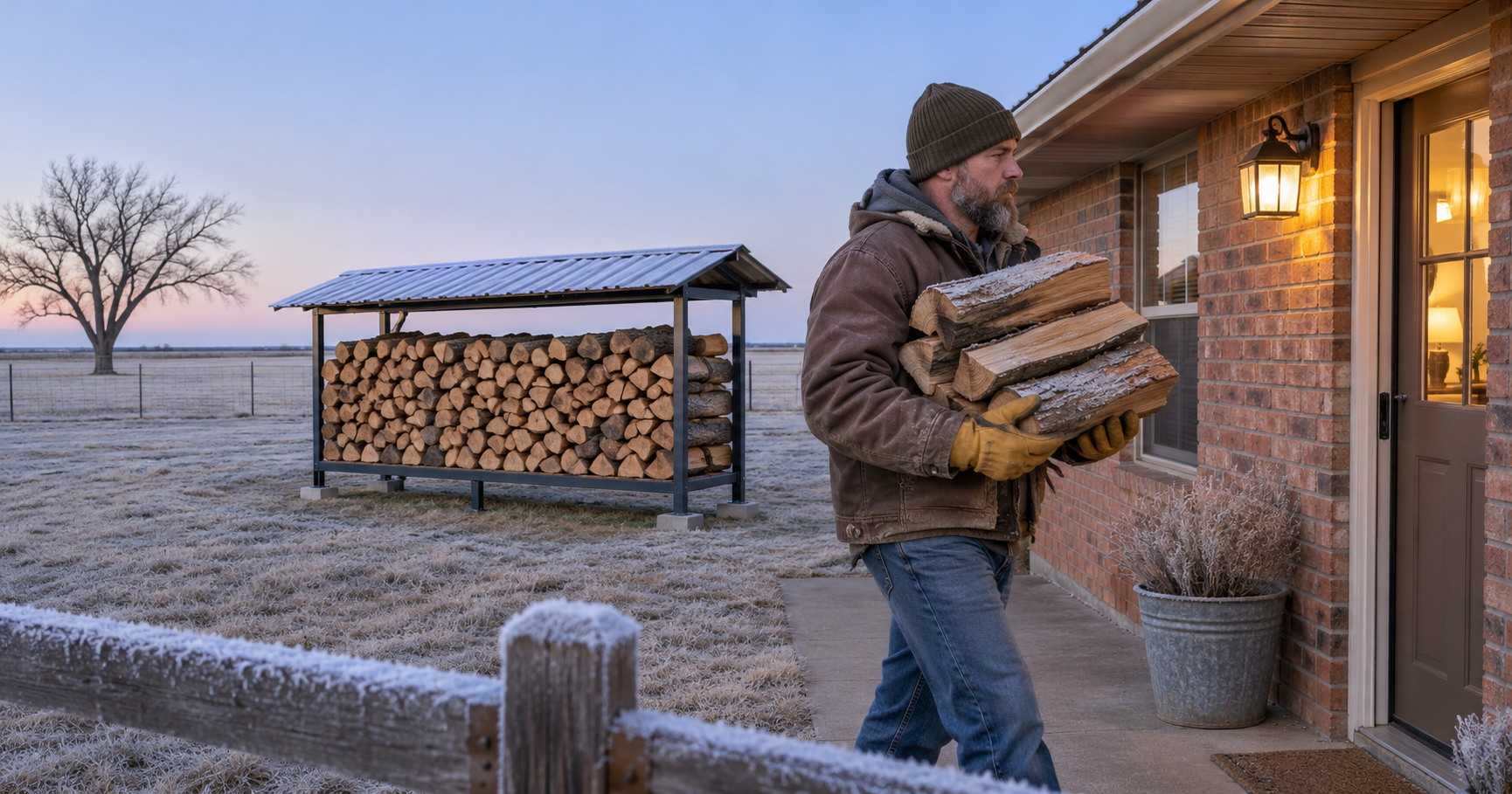
Store your firewood off the ground, covered on top, and open on the sides so air can move through the stack. Keeping it dry is what makes it ready to light when you need it.
A few simple habits make a difference:
- Raise the stack. Use a rack, pallets, or another base so the bottom pieces are not sitting on the ground.
- Cover the top only. A tarp or roof keeps rain and snow off while the sides stay open for airflow.
- Keep a small supply near the door. Bring a day’s worth of wood inside so you are not hauling it through the cold at night.
- Place the main stack with care. Keep it a safe distance from your house and any other structures, and check for pests before carrying wood indoors.
What Safety Checks Should You Make Before You Light a Fire?
Before the first freeze, make sure your chimney or stove vent is clear and your home has working alarms. Safety agencies are consistent on this: the CDC and the U.S. Consumer Product Safety Commission both urge an annual professional inspection of heating equipment and working carbon monoxide alarms in the home.
Use this checklist before you rely on your reserve:
- Have your fireplace or wood stove inspected. A professional can check the flue and venting so smoke and carbon monoxide leave your home safely.
- Burn wood only in a properly vented appliance. The CDC advises using a fireplace or wood stove only if it vents to the outside and does not leak flue gas into your living space.
- Install and test alarms. The CPSC recommends smoke alarms on every level of the home and inside each bedroom, plus carbon monoxide alarms.
- Never bring a generator or grill indoors. The CPSC warns that generators, charcoal grills, and gas grills should never be used in an enclosed area, because the carbon monoxide they produce can kill in minutes.
- Follow your manufacturer’s instructions. Every fireplace and stove has its own guidelines for fuel, clearances, and use.
Carbon monoxide is invisible and odorless, so alarms are your early warning.
How Can You Stock Up Without a Last-Minute Rush?
The easiest way is to order early and online, before the forecast turns. At Freedom Firewood, you can place your order online, and we offer both pickup and delivery. That means you can set up your reserve without a trip across town in the cold.
We carry fully seasoned, ready-to-burn firewood in oak, hickory, mesquite, pecan, pinon, and mixed varieties. Customers who want a variety can browse our mixed wood options, and those who prefer a single species can choose from our individual product pages.
We serve Lubbock, the South Plains, and West Texas, with local and long-distance delivery. Stock and schedules can change quickly when the weather turns, so ordering now, while the days are still mild, gives you the best chance of getting exactly what you want.
Frequently Asked Questions
What should I do if I feel dizzy or sick while using a fireplace or stove?
Get fresh air right away and seek prompt medical attention. Dizziness, lightheadedness, and nausea can be signs of carbon monoxide poisoning, according to the CDC. If anyone in the home is affected, leave the house and call 911 or your local emergency number.
Is it safe to leave a fire burning overnight?
It is safest not to. Fire safety guidance generally advises against leaving a fire unattended or going to sleep with one burning. Let the fire burn down fully, make sure the fireplace or stove is safe, and rely on warm bedding and a working alarm system overnight.
Can I use pecan and hickory for heating, or only for cooking?
You can use both for heating. Pecan and hickory are hardwoods that burn well in a fireplace or stove, as long as they are dry and seasoned. They are popular for smoking and grilling, but there is no reason they cannot do double duty in your reserve.
Should I wait for a freeze forecast before I order firewood?
It is better to order before the forecast turns cold. When a freeze is on the way, many households buy at once, and availability and delivery schedules can tighten. Ordering ahead of the rush gives you more choice and keeps your preparation stress-free.
A freeze does not have to catch anyone off guard. A dry, covered stack of firewood, a safe and inspected fireplace or stove, and working alarms add up to real peace of mind for your household. We have been part of the Lubbock community through cold snaps before, and we are here to help you get ready for the next one.