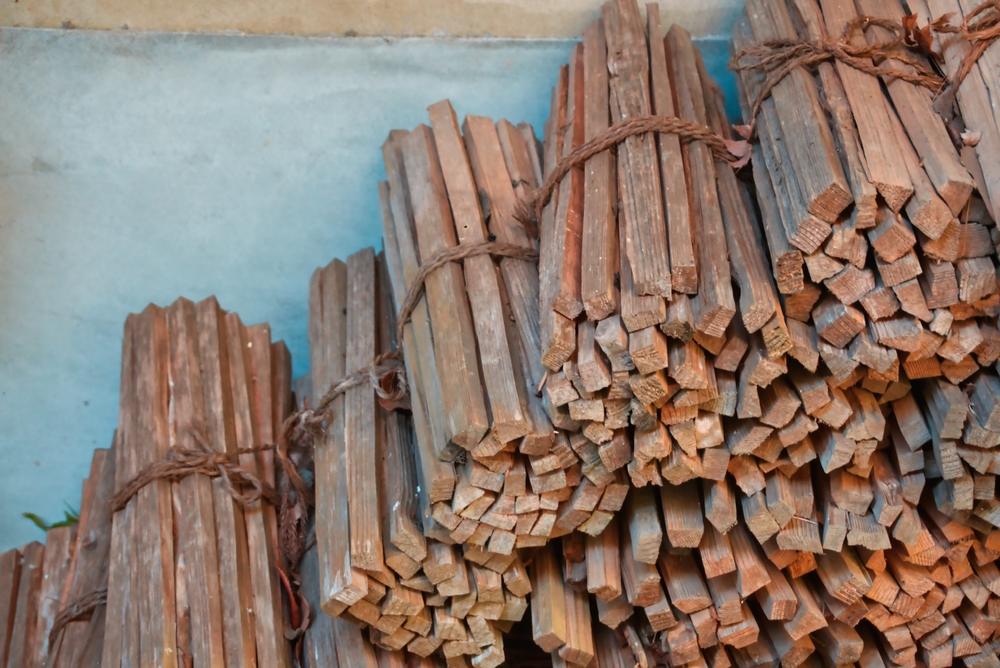
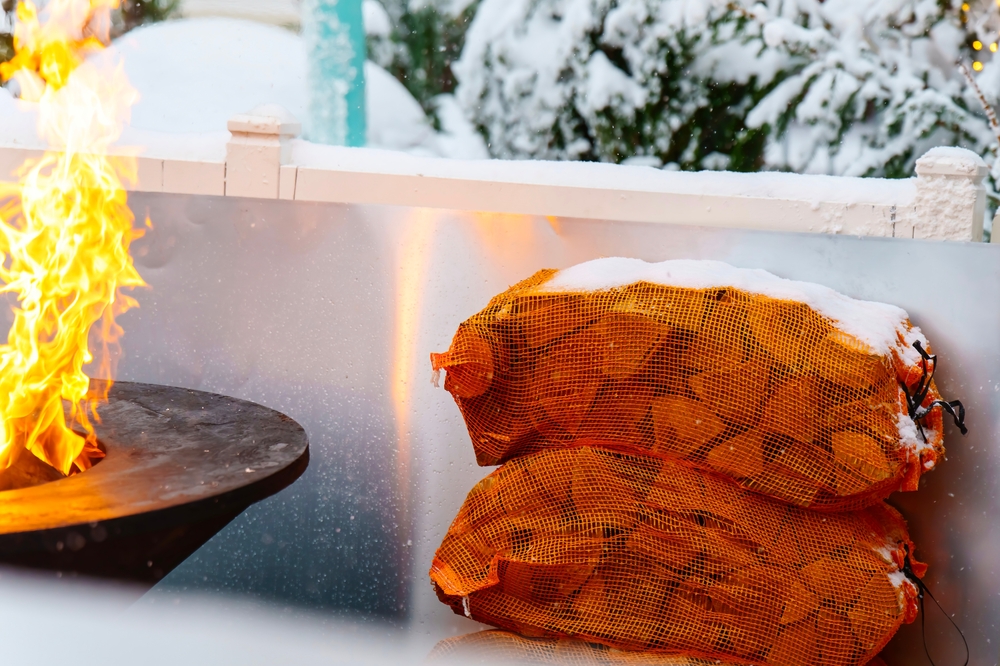
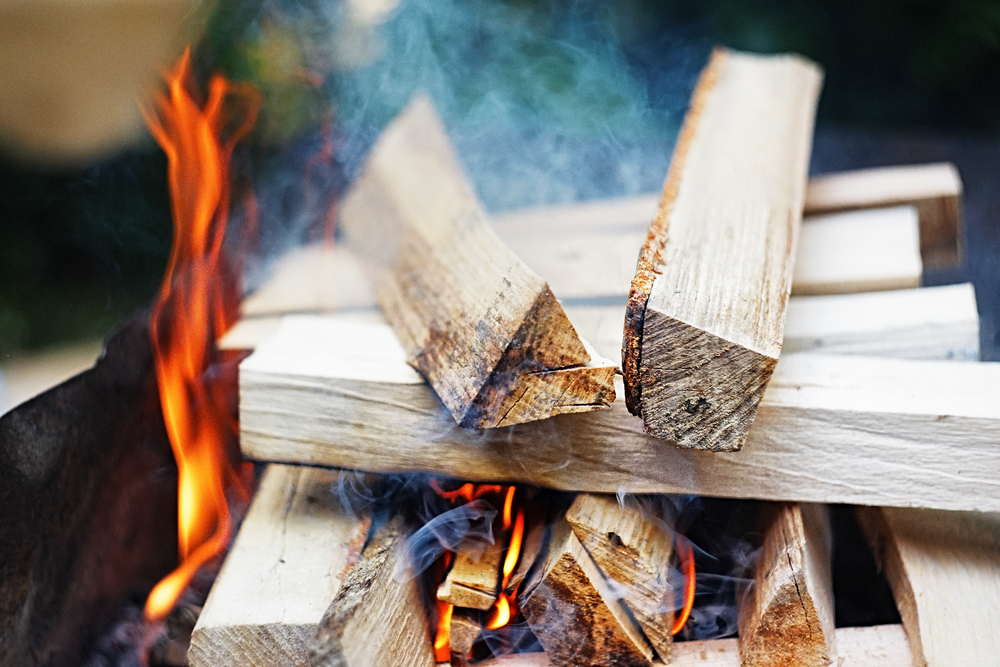
Winter in Lubbock can bring sharp temperature swings, occasional snow and ice, and stretches of cold weather that make a ready supply of dry firewood especially useful. But leaving firewood bundles directly on the ground or wrapping them too tightly can trap moisture and create conditions where mold and decay develop.
The best way to store firewood bundles is to keep them elevated, covered from precipitation, and open to airflow on the sides. In Lubbock, the combination of generally dry High Plains air with occasional winter precipitation means firewood needs protection without being completely sealed. A rack, pallet, or other raised surface paired with a top cover can help keep bundles dry and ready to burn.
What local readers should know
Firewood bundles should be stored several inches above the ground so they do not absorb moisture from soil, concrete, snow, or ice.
In Lubbock County, wind-driven precipitation can reach wood that appears protected, so placement matters as much as the cover itself.
Cover the top of the wood while leaving the sides open enough for air to circulate.
Avoid tightly wrapping an entire stack in plastic because trapped moisture has nowhere to escape.
Check stored bundles after winter storms and before bringing firewood indoors.
Why Does Proper Firewood Storage Matter in Lubbock?
Proper firewood storage matters in Lubbock because even a relatively dry regional climate does not eliminate winter moisture problems. Snow, freezing precipitation, rain, ground moisture, and temperature changes can all introduce water into a poorly protected stack, while insufficient airflow can slow drying.
The National Weather Service maintains climate records for the area showing that measurable winter snowfall is a normal part of the local climate. January snowfall normals for the 1991-2020 period total 1.6 inches, and individual winter storms can bring considerably more.
That matters whether you are storing wood near Tech Terrace, South Lubbock, Wolfforth, or farther out in Lubbock County. A stack that sits uncovered through a wet winter event may remain damp in protected areas even after the surrounding ground looks dry.
Freedom Firewood helps local customers get the firewood they need for cold-weather use. Once you have your wood, a few simple storage habits can help preserve its condition until you are ready to burn it.
What Does Local Winter Weather Mean for Stored Firewood?
Lubbock winter weather means stored firewood can experience dry stretches interrupted by significant cold, snow, or other precipitation, so storage needs to handle both ventilation and sudden moisture. The goal is not to create an airtight enclosure. It is to keep precipitation off while allowing existing moisture to escape.
National Weather Service data illustrates how variable local winters can be. For example, January 2026 included 6.4 inches of snow at the Lubbock climate station and a monthly low of -2°F.
For residents across the South Plains, that variability makes a simple rule useful: keep firewood off wet surfaces, protect it from precipitation, and give it room to breathe.
How Does Moisture Affect Firewood Bundles?
Moisture affects firewood bundles by making them harder to light, less pleasant to handle, and more susceptible to mold or decay when damp conditions persist. Moisture can enter from above during precipitation, from below through contact with wet surfaces, or remain trapped when a stack is covered too tightly.
The outer pieces in a bundle may dry quickly in the High Plains wind while wood deeper in a tightly packed stack remains damp. That is why checking only the exposed surface does not always tell you how well the entire supply is being stored.
For homeowners near Texas Tech University, Mackenzie Park, or newer residential areas in southwest Lubbock, the same basic principle applies: airflow is part of moisture control.
What Are the Warning Signs of Poorly Stored Firewood?
Poorly stored firewood often shows visible or physical signs of excess moisture before the problem becomes severe. Inspect your bundles periodically, especially after snow, rain, or prolonged freezing weather.
Watch for:
Visible white, green, gray, or dark growth on the wood
A musty or damp smell around the stack
Bundles that remain noticeably wet well after a storm
Soft or deteriorating areas in individual pieces
Moisture collecting underneath plastic covers
Wood sitting directly against wet soil or concrete
Persistent dampness in the center or bottom of the stack
Finding one damp piece does not necessarily mean an entire supply is unusable. It does mean the storage setup deserves attention.
When Should You Get Help With Your Firewood Supply?
You should consider getting fresh firewood when your stored supply has become persistently wet, badly deteriorated, or unsuitable for the fire you planned to use it for. Minor storage issues can often be corrected by moving dry, sound wood to a better-ventilated location and improving its protection.
If you are uncertain about wood that shows substantial mold, rot, or prolonged saturation, replacing questionable bundles may be more practical than trying to salvage them.
For Lubbock homeowners preparing for a cold front, checking your supply before temperatures fall also gives you time to address shortages rather than discovering a problem when you want to start a fire.
What Commonly Causes Firewood to Get Wet in Lubbock?
The most common causes of wet firewood in Lubbock are direct exposure to precipitation, ground contact, poor airflow, and covers that trap moisture. Local wind can make storage more complicated because rain or snow does not always fall straight down.
1. Storing bundles directly on the ground
Bare soil can transfer moisture into the lowest pieces. Snow and ice around the base of a stack can make the problem worse.
2. Completely wrapping the stack
Plastic can block rain, but wrapping the top and all four sides tightly can also trap moisture. A top cover with ventilation around the sides is generally a better approach.
3. Storing wood against an exterior wall
A tightly packed stack can reduce airflow and hold moisture between the wood and the structure. Leave space for circulation.
4. Ignoring wind-driven precipitation
On the open South Plains, wind can carry rain and snow under an overhang or onto the side of an otherwise protected stack. Check the direction and exposure of your storage area.
5. Leaving bundles in low spots
Water that collects after precipitation can soak the bottom of a stack. Choose a raised, well-drained location.
How Can You Prevent Mold and Moisture in Firewood?
You can reduce mold and moisture problems by elevating firewood, covering it from above, maintaining airflow, and inspecting it after wet weather. These steps are inexpensive and work well for typical backyard, patio, or garage-adjacent storage around Lubbock.
Use a purpose-built firewood rack, pallet, or another stable raised platform. Keep the stack orderly rather than packing pieces into a dense pile. Place a cover over the top while allowing the sides to remain exposed to moving air.
During winter, inspect the lowest bundles after snow or freezing precipitation. If a cover has shifted in strong South Plains winds, reposition it promptly.
For short-term indoor storage, bring in only the amount of firewood you expect to use soon rather than moving a large outdoor stack into the house.
What Results Can You Expect From Better Firewood Storage?
Better firewood storage helps preserve the condition of your bundles by reducing unnecessary exposure to water and allowing ventilation around the stack. It cannot reverse significant decay or guarantee that improperly seasoned wood will become ready to burn immediately, but it can prevent avoidable storage problems.
A well-designed setup should leave the wood protected from direct precipitation without visible condensation building up beneath the cover. After a typical dry stretch in West Texas, exposed surfaces should have an opportunity to dry rather than remaining enclosed in stagnant, damp air.
What Firewood Storage Mistakes Should Lubbock Homeowners Avoid?
The biggest firewood storage mistakes are sealing the stack completely, placing it directly on a damp surface, and assuming Lubbock’s dry reputation means moisture cannot become a problem.
Mistake: Wrapping every side tightly in a tarp. Consequence: Moisture can become trapped inside. Better approach: Cover the top while preserving side ventilation.
Mistake: Stacking bundles directly on soil. Consequence: The bottom layer can absorb ground moisture. Better approach: Elevate the entire supply on a stable rack or platform.
Mistake: Forgetting about the stack after a storm. Consequence: A shifted cover or accumulated snow can expose wood longer than expected. Better approach: Inspect your storage area after significant winter weather.
Mistake: Waiting for a cold night to check your supply. Consequence: You may discover wet or insufficient firewood when you need it most. Better approach: Check your bundles before the next cold front arrives.
What Is a Common Winter Firewood Scenario in Lubbock?
A common Lubbock scenario is a homeowner placing several firewood bundles beside a patio or exterior wall where they stay dry most of the time. A winter storm arrives with strong wind, precipitation reaches the stack, and the bottom bundles remain damp because they are sitting on the ground or concrete.
The better setup is simple. Elevate the wood, leave room around the stack for airflow, and secure a top cover so West Texas wind cannot easily pull it away. Checking the stack after the storm can catch moisture problems early.
What Firewood Solutions Are Available Locally?
Local firewood solutions can help homeowners replenish a supply that has run low or replace bundles that were poorly stored and became unusable. Planning ahead also helps ensure you have appropriate firewood available before colder weather increases your need for it.
At Freedom Firewood, we serve local customers who need firewood in the Lubbock area. Once your supply is home, following proper storage practices can help protect it between uses.
Outdoor storage is generally the practical choice for the main firewood supply because it allows ventilation while keeping a large quantity of wood outside the living space. A small amount can be brought inside shortly before use when appropriate.
Option
Best Use
Main Consideration
Raised outdoor rack
Primary storage
Needs top protection from precipitation
Covered outdoor area
Convenient winter access
Must still have airflow
Garage or enclosed area
Limited storage where appropriate
Avoid damp, poorly ventilated conditions
Indoor storage
Small, short-term supply
Do not unnecessarily stockpile large amounts indoors
For properties around Wolfforth, Shallowater, Ransom Canyon, and Lubbock County, the best location will depend on wind exposure, drainage, and the layout of the property.
What Areas Does Freedom Firewood Serve?
Freedom Firewood serves customers in the Lubbock area. Readers in nearby communities should contact us to confirm current service availability for locations such as Wolfforth, Shallowater, or other parts of the South Plains.
What Can Happen If You Ignore Wet Firewood?
Ignoring wet firewood can lead to persistent mold growth, deterioration, difficult fire-starting, and wasted bundles. In Lubbock, a stack may look dry again quickly on the outside after a storm while protected or tightly packed sections remain damp.
Checking your storage setup before and after winter weather takes little time and can help you identify exposed bundles before prolonged moisture becomes a larger problem.
Frequently Asked Questions About Firewood Storage in Lubbock
Should I cover my firewood in Lubbock during winter?
Yes, firewood in Lubbock should be protected from rain, snow, and freezing precipitation, particularly from above. Avoid sealing the entire stack in plastic. A secure top cover combined with open sides helps block direct moisture while maintaining the airflow needed for the wood to dry.
Can I store firewood directly on concrete?
It is better to elevate firewood rather than leave bundles directly on concrete for extended periods. Concrete can become wet from precipitation, melting snow, or drainage. A rack or stable raised platform creates separation from the surface and improves airflow beneath the lowest pieces.
Does Lubbock get enough snow to affect firewood storage?
Yes, Lubbock receives measurable winter snowfall, although amounts vary considerably from year to year and storm to storm. National Weather Service climate normals show January snowfall is part of the local climate. Keeping wood covered and elevated prepares your supply for those occasional snowy periods.
Should firewood be completely covered with a tarp?
No, completely wrapping firewood can interfere with airflow and trap moisture underneath the tarp. Protect the top of the stack from precipitation while allowing air to circulate around the sides. In the South Plains, make sure the cover is also secured against strong wind.
Where is the best place to store firewood around my Lubbock home?
The best location is a dry, elevated, well-ventilated spot protected from direct precipitation. Choose an area with good drainage and enough clearance for air to move around the wood. Because wind can drive precipitation sideways in West Texas, consider the exposure of the location as well as overhead coverage.
How can I tell if my firewood has too much moisture?
Look for persistent dampness, musty odors, visible mold-like growth, or soft and deteriorating areas. The outside of a bundle can dry before the center or bottom does, so inspect several pieces. If substantial portions remain wet or deteriorated, consider replacing the affected wood.
Should I check stored firewood after a Lubbock winter storm?
Yes, checking your firewood after a winter storm can reveal shifted covers, accumulated snow, standing water, or wet bottom bundles. Local wind can expose portions of a stack even when it started out protected. Correcting those problems quickly helps prevent moisture from remaining trapped around the wood.
When should I buy firewood for winter in Lubbock?
Buying firewood before you expect to use it gives you time to organize a dry, ventilated storage area and check your supply before colder weather arrives. If you already have stored bundles, inspect them before a forecast cold spell so wet or deteriorated wood does not catch you by surprise.
Keep Your Winter Firewood Dry and Ready in Lubbock
Good firewood storage does not need to be complicated. Keep bundles raised, protect them from precipitation, maintain airflow, and check them after winter weather. Those basic habits are especially useful in a South Plains climate where dry periods can quickly give way to freezing temperatures, snow, or other winter precipitation.
Keep Your Firewood Ready for the Next Lubbock Cold Front
We can help you prepare your firewood supply before colder weather arrives. Store it correctly, inspect it regularly, and replace bundles that are no longer in suitable condition.
A cool evening on the South Plains can turn a backyard fire pit, fireplace, or outdoor gathering into the best seat in the house. But before stocking up on firewood in Lubbock, it helps to know whether a small bundle or a larger bag makes more sense for how often you plan to burn.
The right choice comes down to how much wood you need, how you will store it, and whether you are planning for one fire or several.
Quick answer:Firewood bundles are generally a practical choice when you need a smaller, easy-to-handle amount for a single fire or occasional use. Bags can make more sense when you want more wood on hand for repeated fires and have a suitable place to store it. For Lubbock residents, considering storage, wind exposure, and how frequently you use your fireplace or fire pit can help you choose without buying too much or running short.
What local readers should know
Bundles are convenient for occasional fires because they are easier to carry, store, and use in smaller quantities.
Bags can be a better fit for Lubbock households that expect to have several fires during stretches of cooler weather.
South Plains wind and blowing dust make protected firewood storage especially useful, regardless of the quantity you purchase.
Residents in areas such as Tech Terrace, Ransom Canyon, Wolfforth, and neighborhoods around southwest Lubbock may have very different storage spaces and firewood needs.
The physical size of the wood pieces matters too, since logs should fit comfortably inside your fireplace, fire pit, or other approved wood-burning setup.
Why Does Firewood Size Matter in Lubbock?
Firewood size matters in Lubbock because the amount you buy should match your burning habits, available storage, and the type of fire you plan to build. Buying too little can cut an evening short, while buying more than you can properly store may leave wood exposed to weather, dirt, or moisture.
Lubbock and the surrounding South Plains are known for open landscapes and windy conditions. That makes storage an important part of the buying decision. Wood left uncovered or scattered around a property can be harder to keep clean, organized, and ready for use.
Local housing also varies considerably. Someone with a backyard fire pit near Tech Terrace may need only a modest amount at a time, while a property owner outside the city or near Wolfforth may have more room for storing a larger supply.
Freedom Firewood serves customers in the Lubbock area who need firewood for their local burning needs. When helping customers choose an amount, we encourage them to think about both the fire they want to build now and how they will handle any wood that remains afterward.
What Is the Difference Between a Firewood Bundle and a Bag?
A firewood bundle is typically a smaller quantity intended for convenient handling and short-term use, while a bag generally provides a larger contained supply. Exact quantities can vary by seller, so customers should compare the actual amount of wood rather than assuming every bundle or bag contains a standard volume.
A bundle can be useful when you are planning one backyard gathering, testing how much wood your fire pit uses, or simply do not want leftover wood.
A bag is more appropriate when fires are a regular part of your cooler-weather routine. Having additional wood available means you do not have to restock before every gathering.
Because package sizes can vary, ask about the amount offered before choosing based on the words “bundle” or “bag” alone.
What Local Firewood Buyers Should Consider
Lubbock firewood buyers should consider frequency of use, storage space, log dimensions, and the size of their fire area before deciding between bundles and bags. These practical details usually matter more than choosing the largest amount available.
Think about where you burn first. A compact outdoor fire pit does not necessarily require the same supply as a larger approved fireplace setup.
Then consider frequency. If you light a fire only a few times each season, bundles may reduce unnecessary storage. If your household regularly gathers around a fire during cool South Plains evenings, keeping a larger quantity available may be more convenient.
Finally, consider where the remaining wood will go. A protected, organized storage location makes purchasing larger quantities much more practical.
What Are the Warning Signs You Bought the Wrong Amount?
The clearest warning signs are repeatedly running out during fires or consistently having more wood than you can store properly. Either problem suggests that your usual purchase size does not match your actual firewood use.
Watch for these signs:
You regularly need more wood before a gathering ends.
You make repeated trips to restock during the same stretch of cool weather.
Leftover wood has no protected storage location.
Your supply becomes scattered or difficult to organize.
Logs are awkwardly sized for your fireplace or fire pit.
You consistently have substantial amounts left when warmer weather returns.
You are buying based only on package appearance rather than the amount you expect to burn.
Tracking what you use during two or three typical fires can make your next purchase easier to estimate.
When Should You Ask a Firewood Supplier for Help?
You should ask a firewood supplier for help when you are unsure about quantity, wood dimensions, or which purchase option matches your planned use. A short conversation can be particularly useful if you have recently installed a fire pit, moved into a home with a fireplace, or are buying firewood for a larger gathering.
We can help customers think through practical firewood options based on their intended use. However, questions about whether a fireplace, chimney, stove, or outdoor fire feature is safe to operate should be directed to an appropriately qualified professional.
Local fire restrictions and burning requirements can also change with conditions. Residents should follow applicable rules before starting an outdoor fire.
How Should You Store Firewood in the South Plains?
Firewood in the South Plains should be kept organized in a protected location that limits unnecessary exposure to moisture, soil, and blowing debris while allowing appropriate airflow. Good storage helps keep your supply usable whether you purchase a small bundle or a larger bag.
Avoid simply placing a larger supply wherever there happens to be open yard space. Lubbock’s wind can move loose material and blow dust and debris around exposed storage areas.
If you live in Lubbock County or nearby communities such as Wolfforth or Shallowater, choose your storage location before purchasing a larger quantity. That simple step can help determine whether a bundle or bag is the more practical choice.
What Can You Expect From the Right Firewood Quantity?
The right firewood quantity should give you enough material for your planned fires without creating an inconvenient storage problem afterward. For occasional users, that may mean choosing smaller amounts more frequently. Regular users may prefer keeping a larger supply ready.
There is no single quantity that works for every Lubbock household. Fire pit size, how long you typically burn, weather, storage capacity, and personal preference all influence consumption.
Start conservatively if you are unsure. Once you know how much wood your typical evening uses, future purchases become easier to plan.
What Are Common Firewood Buying Mistakes?
Common firewood buying mistakes include focusing only on price or package size instead of matching the purchase to the fire, storage area, and frequency of use.
Mistake: Buying the largest amount automatically. Consequence: You may end up with more wood than you can store appropriately. Better approach: Estimate how many fires you expect before purchasing.
Mistake: Buying too little for a gathering. Consequence: The fire may run out before the evening does. Better approach: Consider expected burn time and keep a reasonable amount available.
Mistake: Ignoring log dimensions. Consequence: Pieces may be inconvenient for your particular fire area. Better approach: Know the approximate dimensions your setup can accommodate.
Mistake: Planning storage after purchasing. Consequence: Wood may end up in an exposed or inconvenient location. Better approach: Prepare the storage space first.
What Is a Common Lubbock Firewood Scenario?
A common Lubbock scenario is a homeowner planning a backyard gathering during cooler weather and deciding how much firewood to have ready. If fires are occasional and storage space is limited, a bundle may be enough. If the family expects several evenings around the fire, a bag may be more convenient.
The same decision can look different for someone near Texas Tech University than for a household on a larger property toward the edge of Lubbock County. The goal is not simply to buy more wood. It is to buy an amount that fits the way you actually use it.
Which Firewood Option Is Right for You?
The right firewood option is the one that provides enough wood for your expected use while fitting comfortably into your storage plan. Bundles generally favor convenience and occasional use, while bags favor customers who want a larger supply available for repeated fires.
Our primary service area is Lubbock and the surrounding South Plains, with nearby communities such as Wolfforth, Shallowater, and Ransom Canyon forming part of the broader local area. Availability and service details should be confirmed directly when placing an order.
What Does Buying the Wrong Amount Cost You?
Buying the wrong amount can create inconvenience rather than value, especially when you repeatedly run short or purchase more wood than you can reasonably store. Lubbock residents can avoid much of that frustration by estimating their typical use and choosing a quantity that matches it.
A little planning is particularly helpful before parties, holiday gatherings, or periods when you expect to use your fire feature more frequently.
Are firewood bundles or bags better for Lubbock homeowners?
Bundles are generally better for occasional use, while bags can be more practical for homeowners who plan to have several fires. Your best choice depends on your fire pit or fireplace, available storage, and frequency of use. Package quantities can vary, so compare the actual amount offered before purchasing.
How much firewood do I need for one evening in Lubbock?
The amount needed for one evening depends on your fire size, burn duration, weather, and how frequently you add wood. There is no reliable universal quantity for every setup. If you are unfamiliar with your firewood consumption, starting with a manageable amount and tracking actual use can help with future purchases.
Is a firewood bundle good for a backyard fire pit?
A bundle can be a convenient choice for an occasional backyard fire pit, particularly when you have limited storage space. The right quantity still depends on the size and duration of your fire. Make sure the individual pieces also fit comfortably within the fire area you intend to use.
Should I buy more firewood before cooler weather in Lubbock?
Buying additional firewood can make sense if you expect to use your fireplace or fire pit repeatedly during cooler weather and have suitable storage available. Rather than stocking up automatically, estimate how frequently you expect to burn and choose an amount you can keep organized and protected between uses.
How should I protect firewood from Lubbock wind and dust?
Keep firewood organized in a suitable storage location where it is not unnecessarily exposed to soil, blowing debris, or moisture, while maintaining appropriate airflow. South Plains wind and dust make storage planning especially worthwhile. The more firewood you purchase at once, the more important an appropriate storage location becomes.
Does every firewood bag or bundle contain the same amount?
No, the terms bag and bundle do not guarantee one universal quantity. Sellers can package firewood differently, so compare the actual quantity, piece size, and other available product details. This is more reliable than deciding based solely on what the packaging is called.
Are bags better for firewood users in Lubbock County?
Bags may be more convenient for Lubbock County residents who burn frequently and have enough suitable storage space. Someone who only uses a fire pit occasionally may prefer smaller bundles instead. Your expected number of fires and available storage should guide the decision rather than package size alone.
Can I use any size log in my fireplace or fire pit?
No, logs should be appropriately sized for the fire area and equipment you are using. Before purchasing, consider the dimensions of your setup and follow its operating instructions. Questions about the safety or condition of a fireplace, chimney, stove, or other fire feature should be handled by an appropriately qualified professional.
Choose a Firewood Size That Fits Your Lubbock Plans
Choosing between bundles and bags becomes much easier once you know how often you plan to burn, how much space you have for storage, and what fits your fire area. We can help local customers consider practical firewood options without making the process complicated.
Get the Right Amount of Firewood for Your Next Local Fire
Plan for a comfortable fire without unnecessary restocking or excess storage.
A cool evening on the South Plains can turn a fireplace into one of the most inviting spots in the house. For homeowners in Lubbock, though, enjoying a fire also means dealing with the practical side of firewood: buying it, transporting it, keeping it organized, and bringing it indoors without creating an unnecessary mess.
Firewood bags offer a simple solution. Instead of committing to a large loose load, homeowners can purchase manageable quantities that are easier to carry, store, and use as needed. Bags are especially convenient for occasional fireplace use, backyard fire pits, weekend gatherings, and households that do not have room for a large woodpile.
What local readers should know
Bagged firewood is easier to carry from a vehicle to a fireplace, fire pit, or designated storage area.
Lubbock homeowners with limited outdoor storage can buy smaller quantities instead of finding space for a large woodpile.
Bags help keep individual quantities contained during transportation and storage.
South Plains residents can keep a modest supply available for cooler evenings without purchasing more wood than they expect to use.
Bagged quantities make it easier to plan for a single gathering, weekend, or short stretch of fireplace use.
Why Are Firewood Bags So Convenient for Lubbock Fireplace Owners?
Firewood bags are convenient for Lubbock fireplace owners because they turn firewood into manageable, contained quantities that are easier to purchase, transport, stack, and bring indoors. For residents who enjoy fires occasionally rather than heating with wood every day, that convenience can eliminate much of the work associated with handling loose firewood.
Local lifestyles vary considerably. A homeowner near Texas Tech University may have different storage options than someone with more outdoor space elsewhere in Lubbock County. Residents in nearby Wolfforth or Shallowater may also use wood for outdoor gatherings in addition to indoor fireplaces.
Freedom Firewood serves customers looking for practical firewood options in the area. We understand that not every customer needs a large quantity at once, which is why convenient purchasing options can make enjoying a fire much simpler.
What Do Local Conditions Mean for Firewood Storage?
Local conditions make proper firewood storage important because West Texas weather can expose wood to wind, blowing dust, precipitation, and changing temperatures. Keeping firewood contained and stored in an appropriate location helps homeowners maintain a neater supply and makes it easier to grab the amount they need when cooler weather arrives.
The Lubbock area is part of the South Plains, where exposed outdoor spaces and windy conditions are familiar parts of property maintenance. A loose pile can require more dedicated space and organization than some households want to provide.
Bagged quantities do not eliminate the need for proper storage. Firewood should still be kept in an appropriate dry location and handled according to the needs of the fireplace or outdoor fire feature being used.
How Do Firewood Bags Affect Everyday Fireplace Use?
Firewood bags make everyday fireplace use simpler by reducing the amount of loose wood homeowners need to handle at one time. A manageable bag can be moved where it is needed, while the remaining supply can stay stored until the next fire, making preparation easier for occasional users.
This can be especially useful during the relatively short periods when local households want to enjoy a fire. Instead of maintaining a substantial woodpile throughout the year, a homeowner can choose an amount that better fits current plans.
That flexibility also works well for outdoor entertaining around Lubbock, including evenings when a backyard fire feature is part of a gathering.
What Are the Signs That Bagged Firewood May Be Right for You?
Bagged firewood may be the right choice if convenience, manageable quantities, and simpler storage matter more to you than keeping a large bulk supply. For many fireplace owners in Lubbock, the decision comes down to how often they burn wood, how much storage space they have, and how easily they want to transport it.
Signs that bags may fit your needs include:
You only use your fireplace occasionally.
You do not have space for a large outdoor woodpile.
You want an easier quantity to carry from your vehicle.
You use firewood primarily for weekend gatherings or special occasions.
You want to keep loose pieces more contained during transport.
You need wood for a backyard fire pit as well as an indoor fireplace.
You prefer purchasing firewood in smaller amounts as you need it.
When Should You Ask a Firewood Professional for Help?
You should contact a firewood professional when you are unsure how much wood to purchase, what firewood options are available, or which quantity best matches your intended use. Local guidance can be particularly useful when planning for a gathering, preparing for cooler weather, or deciding between bagged and larger quantities.
Homeowners can safely handle routine tasks such as organizing their wood supply and keeping their storage area tidy. Questions involving the fireplace, chimney, installation, ventilation, or repairs should be directed to an appropriately qualified fireplace or chimney professional.
What Common Problems Make Loose Firewood Less Convenient?
Loose firewood becomes less convenient when transportation, storage space, cleanup, or overbuying creates more work than the homeowner expected. These issues can be especially noticeable for Lubbock residents who only light a few fires during cooler weather and therefore have little reason to maintain a large supply.
Common challenges include carrying multiple loose pieces, finding enough dedicated storage space, keeping vehicle cargo areas orderly, and estimating how much wood is actually needed.
For residents in Slaton, Wolfforth, Shallowater, and other communities around Lubbock County, the best quantity often depends on whether the wood is intended for regular fireplace use or an occasional outdoor fire.
How Should You Store Bagged Firewood?
Bagged firewood should still be stored in a dry, appropriate location where it is protected from unnecessary moisture and kept safely away from ignition sources. The bag makes the quantity easier to manage, but homeowners should not assume that packaging replaces sensible firewood storage practices.
Choose a location that is convenient without creating a safety concern. Avoid placing firewood where it interferes with walkways, equipment, or access around the property.
Before cooler weather arrives on the South Plains, check your remaining supply and storage location. That simple seasonal habit can help prevent a last-minute search for firewood when you decide to use the fireplace.
What Results Can You Expect From Choosing Firewood Bags?
Choosing firewood bags can give homeowners a more manageable buying and handling experience, particularly when only a modest amount of wood is needed. The main benefits are convenience, portability, easier organization, and the ability to purchase quantities that better match occasional fireplace or fire pit use.
Bags will not necessarily be the ideal choice for someone who burns large amounts of wood regularly. They are most useful when the priority is straightforward handling and access to a practical quantity.
For many local fireplace owners, that is exactly the point: less time dealing with a woodpile and more flexibility when it is time to enjoy a fire.
What Mistakes Should Fireplace Owners Avoid When Buying Firewood?
Fireplace owners should avoid buying based only on quantity because storage, intended use, handling, and the requirements of the fire feature all matter. A large purchase can seem convenient initially, but it may create unnecessary storage challenges if the household only burns wood occasionally.
Mistake: Buying far more than you expect to use. Consequence: You need additional storage space and must manage the remaining wood. Better approach: Estimate how often you realistically plan to have fires and choose accordingly.
Mistake: Leaving firewood exposed without considering weather. Consequence: The supply may be unnecessarily exposed to moisture and local conditions. Better approach: Plan an appropriate storage location before purchasing.
Mistake: Assuming every fireplace can use the same fuel. Consequence: You could purchase something unsuitable for your particular appliance or fire feature. Better approach: Follow the fireplace or appliance manufacturer’s requirements.
What Is a Common Local Firewood Scenario?
A common Lubbock scenario is a homeowner planning a backyard gathering or noticing a cooler forecast and deciding to use the fireplace for the first time in a while. The homeowner wants enough firewood for the occasion but does not want a substantial loose pile left over afterward.
Bagged firewood fits that situation because the quantity is contained and manageable. It can be transported home, stored appropriately, and used as needed without turning an occasional fire into a larger storage project.
The same situation can apply to residents near Buffalo Springs Lake or in surrounding South Plains communities who want firewood for occasional recreational use where fires are permitted.
What Firewood Options Can Help Local Homeowners?
The right firewood option should match how frequently you burn, where you store wood, and how much you want to handle at once. For occasional fireplace owners, bagged firewood offers a convenient way to obtain a manageable supply without committing to the space and logistics associated with larger quantities.
We can help customers explore firewood options based on their intended use and quantity needs.
Bagged and bulk firewood serve different needs, with bags emphasizing convenience and bulk quantities making more sense for customers who expect to burn substantially more wood. The better option depends on frequency of use, available storage, transportation, and how much handling the homeowner wants to do.
Consideration
Bagged Firewood
Larger Quantities
Handling
Easier to move in individual quantities
Requires handling more wood
Storage
Suitable for smaller storage needs
Requires more dedicated space
Occasional use
Convenient
May provide more than needed
Frequent use
May require multiple purchases
Can be more practical
Transportation
Contained and manageable
Requires planning for a larger load
Where Can Area Residents Use Convenient Firewood Options?
Convenient firewood options can serve fireplace and fire pit owners throughout Lubbock and surrounding South Plains communities. Residents of nearby Wolfforth, Shallowater, Slaton, and other parts of Lubbock County may have similar needs when choosing between manageable bags and larger firewood quantities.
Always follow applicable rules and restrictions before using an outdoor fire, particularly when local conditions affect whether burning is appropriate.
What Can Happen If You Wait Until You Need Firewood?
Waiting until the moment you want a fire can leave you without the appropriate supply or enough time to think through storage and quantity. Planning ahead allows local homeowners to decide how much wood they actually need and where they will keep it before a cool evening or gathering arrives.
Keeping a manageable supply can be particularly convenient during the cooler portions of the year, when a sudden decision to light the fireplace should not require a complicated firewood project.
Are firewood bags convenient for occasional fireplace use in Lubbock?
Yes. Firewood bags are particularly convenient for occasional fireplace use because they provide a manageable quantity that is easier to carry and store than a large loose supply. For Lubbock homeowners who enjoy only a handful of fires during cooler periods, bags can make purchasing firewood more practical.
Is bagged firewood easier to transport?
Yes. Bagged firewood keeps individual quantities contained, which can simplify carrying and transportation. Instead of moving loose pieces individually, homeowners can handle a defined quantity at a time. The actual weight and ease of carrying will depend on the size and contents of the specific bag.
Where should I store firewood in Lubbock?
Firewood should be kept in an appropriate dry storage location protected from unnecessary moisture and safely positioned away from ignition hazards. Lubbock’s wind and exposed South Plains conditions are additional reasons to think carefully about where wood is stored rather than leaving a supply scattered or unsecured around the property.
Is bagged firewood useful for backyard fire pits in Lubbock County?
Yes, bagged firewood can be convenient for permitted backyard fire pit use because homeowners can purchase and carry manageable quantities for individual gatherings. Before starting an outdoor fire in Lubbock County, check applicable restrictions and current conditions and follow the requirements for your specific fire feature and property.
Should I buy bagged or bulk firewood?
Choose bagged firewood when convenience, portability, and smaller quantities are priorities. A larger quantity may make more sense if you burn wood frequently and have suitable storage. Consider how often you use your fireplace or fire pit before deciding which purchasing option better fits your household.
How much firewood do I need for a fireplace?
The amount you need depends on the fireplace, length of the fire, number of fires you plan to have, and size of the wood pieces. Rather than relying on a universal quantity, estimate your expected use and ask your firewood provider about available quantities that fit those plans.
Can I keep bagged firewood indoors?
Only bring in and store firewood in a manner that is appropriate for your home and fireplace setup. Bags make wood easier to move, but they do not override normal safety and storage considerations. Keep firewood away from ignition hazards and follow applicable fireplace and manufacturer guidance.
Why are firewood bags practical for South Plains homeowners?
Firewood bags are practical for South Plains homeowners because they provide a contained, portable quantity without requiring a large permanent woodpile. That can suit households in Lubbock, Wolfforth, Shallowater, and surrounding communities where fireplace or backyard fire use may be occasional rather than a daily heating routine.
Make Your Next Fire Easier to Prepare For
A convenient firewood supply means less time thinking about transportation, storage, and leftover wood. We help local customers choose practical firewood options that fit how they plan to enjoy their fireplaces and outdoor fires.
Nothing beats the warmth and aroma of a piñon pine fire on a chilly West Texas evening. Whether you’re relaxing after a windy day in Midland, hosting friends in Odessa, or enjoying a quiet night in Big Spring, properly stacked and stored firewood helps every fire burn cleaner, safer, and more efficiently.
Quick Answer
The safest way to stack and store piñon pine firewood is to keep it elevated off the ground, stacked loosely for airflow, protected from rain with a cover on the top only, and stored several feet away from your home. In West Texas, where dry conditions, strong winds, and occasional winter moisture all play a role, proper storage helps preserve the wood’s quality while reducing safety risks.
What West Texas Homeowners Should Know
Keep firewood at least 20 feet away from your home whenever possible to discourage insects and reduce fire risk.
Elevate your stack on pallets, treated runners, or a firewood rack to improve airflow and prevent ground moisture from affecting the wood.
Cover only the top of the stack so West Texas winds can continue drying the sides.
Piñon pine burns best when it stays dry and well ventilated, making proper storage especially important during changing winter weather.
Residents throughout Midland, Odessa, Big Spring, Andrews, and surrounding communities often benefit from preparing their firewood supply before the coldest temperatures arrive.
Why Proper Firewood Storage Matters in West Texas
Proper firewood storage keeps piñon pine dry, easy to light, and ready for consistent heat throughout winter. Although West Texas is known for its dry climate, occasional rain, winter cold fronts, and strong winds can quickly affect exposed firewood.
The Permian Basin experiences frequent wind events that can blow debris into loosely stacked wood piles or topple unstable stacks. Dust can also settle into improperly stored firewood, making organization and airflow even more valuable.
Freedom Firewood helps homeowners throughout West Texas enjoy premium firewood, and we always encourage storing it correctly so every bundle performs as intended.
Local Field Observations
Based on our experience serving homeowners across the Permian Basin, improperly stored firewood often develops problems long before winter is over. Common issues include:
Wood stacked directly on bare soil absorbing moisture after rain.
Plastic tarps wrapped completely around the stack, trapping condensation.
Unstable piles that lean after repeated wind events.
Firewood stored directly against fences or exterior walls where airflow is limited.
Homeowners waiting until freezing weather arrives before organizing their wood supply.
These observations reflect common storage habits we see throughout the region rather than published research.
How Proper Storage Improves Your Fires
Properly stored piñon pine offers several benefits for West Texas homeowners.
Dry wood ignites faster and produces more consistent heat.
Better airflow during storage helps preserve the wood’s natural aroma that many people enjoy.
Cleaner-burning firewood generally creates less smoke than damp wood, making outdoor gatherings and indoor fireplace use more enjoyable.
Keeping stacks organized also makes winter access easier when temperatures drop or windy conditions develop.
Warning Signs Your Firewood Is Not Stored Correctly
Watch for these common warning signs:
Wood feels damp or unusually heavy.
Visible mold or mildew appears between logs.
The stack leans or shifts after windy weather.
Insects or rodents begin nesting inside the pile.
Bark separates excessively due to moisture problems.
Wood develops a musty smell instead of its natural pine scent.
Logs are difficult to ignite despite using proper fire-starting techniques.
When You Should Reorganize or Replace Stored Firewood
You can safely inspect your own firewood pile, but some situations deserve immediate attention.
If a stack becomes unstable, rebuild it before someone gets hurt.
If moisture has affected a large portion of the pile, separate the dry pieces from the damp ones and allow additional drying time whenever possible.
If insect activity becomes significant, move the stack farther from your home and avoid bringing affected wood indoors until you’re ready to burn it.
Common Causes of Firewood Storage Problems in West Texas
1. Ground Moisture
Even in a dry climate, soil can transfer moisture into the bottom layer of firewood after rainfall.
2. Poor Airflow
Stacks placed tightly against walls or wrapped completely in plastic cannot dry efficiently.
3. Strong Regional Winds
High winds common across Midland County, Ector County, and nearby areas can destabilize poorly built stacks.
4. Delayed Winter Preparation
Waiting until the first cold front arrives often means scrambling to organize firewood during less favorable weather.
Prevention and Seasonal Maintenance Tips
Proper firewood storage is simple with a few good habits.
Stack wood in straight, stable rows.
Leave small gaps between logs for ventilation.
Elevate the stack several inches off the ground.
Cover only the top surface with a breathable cover.
Inspect the stack after major wind events.
Rotate older wood toward the front so it gets burned first.
Keep the storage area clear of weeds and debris.
Preparing your wood before late fall allows plenty of time to organize everything before winter temperatures settle across West Texas.
What You Can Expect from Properly Stored Piñon Pine
When stored correctly, piñon pine remains dry, lights easily, and produces the pleasant crackling fire many homeowners look forward to during colder months.
Proper storage also makes handling firewood easier throughout the season since stacks remain organized and accessible.
While no storage method completely eliminates weather exposure outdoors, following these best practices helps preserve wood quality for the season.
Common Firewood Storage Mistakes
Mistake: Wrapping the entire stack in plastic.
Consequence: Moisture becomes trapped inside, increasing the chance of mold.
Better Approach: Cover only the top while leaving the sides open for ventilation.
Mistake: Stacking directly on dirt.
Consequence: Bottom logs absorb moisture and may deteriorate faster.
Better Approach: Use pallets, racks, or treated runners.
Mistake: Building overly tall stacks.
Consequence: Wind can cause the pile to collapse.
Better Approach: Build lower, stable rows with a solid base.
Common Local Scenario
A homeowner in the Midland area purchases firewood early in the season but leaves it stacked directly on the driveway under a fully wrapped tarp. After several weeks of changing temperatures and a few rainy days, the wood develops excess moisture despite the dry climate.
By rebuilding the stack on pallets, removing the side coverings, and allowing natural airflow, the remaining firewood dries more effectively and burns much better throughout winter.
Related Firewood Solutions
Choosing quality firewood is only part of the equation. Proper delivery, stacking guidance, and selecting the right wood species all contribute to a better burning experience.
Whether you’re preparing for outdoor gatherings, backyard fire pits, indoor fireplaces, or holiday entertaining, having clean, properly stored piñon pine helps you enjoy every fire.
Works well with proper planning and a suitable storage area.
Helps homeowners understand the best placement for delivered firewood.
Requires stable stacking techniques.
Offers recommendations based on available space and accessibility.
Needs routine inspections after storms or wind events.
Starts with quality firewood that is ready for proper storage.
Serving West Texas Communities
We proudly serve homeowners throughout Midland, Odessa, Big Spring, Andrews, and surrounding West Texas communities. Our goal is to provide quality firewood along with practical advice that helps customers enjoy safe, efficient fires all winter long.
The Cost of Ignoring Proper Firewood Storage
Poor storage can reduce burn quality, increase wasted wood, create unnecessary cleanup, and make winter fires more frustrating than enjoyable.
Taking a little time to stack and protect your firewood properly helps preserve its quality throughout the heating season.
How should I stack piñon pine firewood in Midland?
The best way is to stack it off the ground in straight rows with space between the logs for airflow. Midland’s windy conditions also make stable stacking especially important.
Can I store firewood outside during a West Texas winter?
Yes. Outdoor storage works well as long as the wood stays elevated, ventilated, and protected from rain on the top only.
Should I cover my firewood completely?
No. Completely wrapping firewood traps moisture. Cover only the top while allowing the sides to remain open.
How far should firewood be from my house?
A good rule is to keep firewood about 20 feet from your home whenever practical. This helps reduce insect concerns and improves overall safety.
Does piñon pine need seasoning?
Most properly prepared piñon pine is ready to burn when purchased from a reputable supplier, but keeping it dry after delivery remains important.
Is firewood storage different in Odessa than other parts of West Texas?
The same basic storage practices apply. Odessa experiences similar dry conditions, occasional winter precipitation, and strong winds that make airflow and stable stacking essential.
Enjoy Better Fires All Winter
A little preparation goes a long way toward keeping your piñon pine firewood dry, organized, and ready whenever temperatures drop across West Texas. Proper storage protects your investment while helping every fire burn more efficiently.
Keep Your Firewood Ready for Every Cold Night
Enjoy cleaner-burning, better-performing piñon pine all winter with proper storage and quality firewood you can count on.
Nothing says West Texas quite like gathering around a smoker with family and friends while the aroma of slow-cooked barbecue fills the air. Whether you’re cooking brisket in Midland, smoking ribs in Odessa, or hosting a backyard cookout anywhere across the Permian Basin, your choice of firewood has a direct impact on flavor, temperature control, and the overall success of your barbecue.
Choosing the right firewood isn’t just about preference. West Texas pitmasters often select mesquite, pecan, or oak based on the type of meat they’re cooking, the cooking time, and the flavor they want to achieve. Understanding the strengths of each wood helps you create consistently delicious barbecue while getting the most from your smoker.
Quick Answer
Mesquite, pecan, and oak each bring unique qualities to West Texas barbecue. Mesquite produces an intense, earthy smoke that’s ideal for beef and shorter cooks. Pecan delivers a milder, slightly sweet smoke that complements pork, poultry, and even vegetables. Oak offers a balanced, versatile flavor with steady heat, making it one of the most popular choices for long smoking sessions and a wide variety of meats.
What West Texas BBQ Fans Should Know
Mesquite burns hot and fast, making it perfect for grilling steaks and smoking brisket when used with care.
Pecan provides a smooth, slightly nutty smoke that enhances pork shoulders, ribs, chicken, and turkey without overpowering the meat.
Oak offers consistent heat and moderate smoke, making it an excellent all-around firewood for beginners and experienced pitmasters alike.
Dry, properly seasoned firewood performs better in the dry climate found throughout Midland, Odessa, Big Spring, and the surrounding Permian Basin.
Windy West Texas conditions can affect smoker temperatures, making quality firewood even more important for maintaining consistent cooking results.
Why This Matters in West Texas
Choosing the right firewood matters because West Texas barbecue traditions are built around slow cooking over real wood fires. The region’s dry climate helps properly seasoned firewood stay ready for use, but it also means wood stored incorrectly can become overly dry or collect dust if left uncovered.
Local pitmasters know that brisket remains king throughout the Permian Basin, making mesquite and oak common favorites. At Freedom Firewood, we help customers choose seasoned firewood that fits their cooking style so they can enjoy better flavor and more consistent results every time they fire up the smoker.
Understanding Mesquite Firewood
Mesquite is the signature wood of Texas barbecue because it produces bold smoke and exceptional heat. Native throughout much of West Texas, mesquite has become closely associated with traditional brisket and steak cooking.
Mesquite works best when you’re cooking:
Beef brisket
Steaks
Beef ribs
Tri-tip
Burgers
The smoke flavor is strong, earthy, and slightly sweet with a distinctive Texas character. Because mesquite burns hotter than many hardwoods, it can quickly produce too much smoke if large amounts are added at once.
Many experienced pitmasters use mesquite in moderation during long smoking sessions, especially for brisket cooks lasting 10 to 14 hours.
Why Pecan Is a Favorite for Balanced Flavor
Pecan provides a milder smoke that adds depth without overwhelming delicate meats. As a member of the hickory family, pecan offers rich flavor while remaining noticeably smoother than mesquite.
Pecan pairs especially well with:
Pork ribs
Pork shoulder
Chicken
Turkey
Sausage
Vegetables
Its subtle sweetness also makes pecan a great choice for backyard cooks who enjoy experimenting with different recipes. Because the smoke isn’t overpowering, it’s more forgiving for beginners learning fire management.
Many barbecue enthusiasts also blend pecan with oak to create a balanced smoke profile for longer cooks.
Why Oak Is the Most Versatile Firewood
Oak is one of the easiest woods to recommend because it delivers reliable heat and moderate smoke for nearly every type of barbecue.
Oak works well for:
Brisket
Pork
Chicken
Sausage
Lamb
Mixed meat cooks
One of oak’s biggest advantages is its steady burn. Instead of producing quick bursts of heat, seasoned oak burns consistently, helping maintain stable smoker temperatures for extended periods.
For homeowners throughout Midland County, Ector County, and nearby communities, oak is often an excellent everyday firewood choice whether using an offset smoker, barrel smoker, or traditional barbecue pit.
Professional Field Observation
One common observation among experienced firewood suppliers is that barbecue results improve significantly when customers use properly seasoned hardwood rather than freshly cut wood.
Green firewood contains excess moisture that creates more steam than smoke. This can make it difficult to maintain cooking temperatures and often produces undesirable flavors.
Seasoned hardwood burns cleaner, lights more easily, and provides the consistent heat needed for successful low-and-slow cooking.
How Firewood Choice Affects Your BBQ
The wood you choose influences several aspects of your barbecue:
Smoke Flavor
Different hardwoods create distinct smoke profiles that enhance different meats.
Heat Production
Some woods burn hotter than others, affecting cooking times and fire management.
Burn Time
Dense hardwoods like oak generally burn longer, reducing the need for constant refueling.
Smoke Intensity
A stronger smoke isn’t always better. Matching smoke intensity to the meat often produces the best results.
Warning Signs You’re Using Poor Firewood
Watch for these signs before starting your next cook:
Wood feels unusually heavy from excess moisture.
Fire produces thick white smoke for extended periods.
Logs hiss or bubble while burning.
Fire struggles to stay lit.
Food develops an overly bitter smoke flavor.
Excess creosote builds inside the smoker.
Temperature fluctuates constantly despite careful fire management.
When to Buy Firewood from a Professional Supplier
Buying from a professional supplier helps ensure you’re getting properly seasoned hardwood that’s ready for cooking.
A quality supplier can also help you:
Choose the right species for your cooking style.
Select properly sized splits for your smoker.
Avoid wood that’s too green or partially rotted.
Purchase enough wood for long smoking sessions.
Common Causes of Poor BBQ Results
Several firewood-related issues can affect your barbecue.
Using Green Wood
Moisture creates excessive smoke and inconsistent temperatures.
Mixing Too Many Wood Types
Combining several hardwoods without a plan can create confusing smoke flavors.
Overusing Mesquite
Because mesquite is powerful, excessive amounts may overpower pork or poultry.
Poor Fire Management
Adding large logs too frequently can create temperature swings during long cooks.
Firewood Storage Tips
Proper storage helps preserve firewood quality.
Keep stacks off the ground.
Cover the top while leaving the sides open for airflow.
Store wood in a dry location protected from standing water.
Rotate older wood forward so it’s used first.
Avoid stacking directly against exterior walls where moisture can become trapped.
What to Expect from Quality BBQ Firewood
Properly seasoned hardwood should:
Ignite easily.
Produce clean blue smoke after the fire stabilizes.
Maintain consistent cooking temperatures.
Deliver predictable smoke flavor.
Require fewer adjustments throughout the cook.
Common Mistakes
Mistake: Choosing wood based only on price.
Consequence: Lower-quality wood may produce inconsistent results.
Better approach: Buy seasoned hardwood suited to your preferred meats.
Mistake: Using only mesquite for every recipe.
Consequence: Delicate meats can become overly smoky.
Better approach: Match the wood species to the food you’re preparing.
Mistake: Cooking with wet firewood.
Consequence: Temperature control becomes difficult.
Better approach: Use properly seasoned hardwood that’s ready to burn.
A Common West Texas BBQ Scenario
Imagine preparing a brisket for a weekend gathering in Odessa. You start the cook with oak for stable overnight heat, then introduce small amounts of mesquite later to build classic Texas smoke flavor without overpowering the meat. This combination provides excellent temperature control while delivering the bold taste many West Texas barbecue fans appreciate.
Related Firewood Solutions
Different cooking styles benefit from different firewood options.
Mesquite for authentic Texas brisket and steaks.
Oak for everyday smoking and long barbecue sessions.
Pecan for pork, poultry, and balanced smoke flavor.
Mixed hardwood options for pitmasters seeking customized flavor profiles.
We proudly serve customers throughout Midland, Odessa, the Permian Basin, and surrounding West Texas communities. Whether you’re preparing for competition barbecue or a backyard family cookout, quality seasoned firewood helps every cook start strong.
The Cost of Choosing the Wrong Firewood
Poor-quality firewood can lead to inconsistent temperatures, wasted cooking time, unpleasant smoke flavors, and disappointing barbecue results. Investing in properly seasoned hardwood helps protect both your time and your meal.
Is mesquite always the best choice for brisket in West Texas?
Yes, mesquite is a classic choice for brisket throughout West Texas because it delivers the bold smoke flavor many traditional pitmasters prefer. Many cooks also blend it with oak for longer smoking sessions.
Which firewood is best for beginners?
Oak is generally the easiest hardwood for beginners because it burns steadily, provides moderate smoke, and works well with nearly every type of meat.
Can I mix mesquite and pecan?
Yes. Many barbecue enthusiasts blend mesquite and pecan to balance bold smoke with a touch of sweetness, especially when cooking pork or chicken.
Does seasoned firewood make a difference?
Yes. Properly seasoned hardwood burns cleaner, produces better smoke, and maintains more consistent cooking temperatures than freshly cut wood.
What wood works best for chicken in the Permian Basin?
Pecan is often an excellent choice because its lighter smoke complements poultry without overpowering it.
How should I store barbecue firewood in West Texas?
Keep firewood elevated, protected from rain, and exposed to airflow. The dry climate across Midland and surrounding communities helps maintain seasoned wood when it’s stored correctly.
Ready to Elevate Your West Texas BBQ?
Great barbecue starts with quality firewood. Whether you prefer the bold character of mesquite, the smooth sweetness of pecan, or the versatility of oak, choosing properly seasoned hardwood helps you get the best results from every cook.